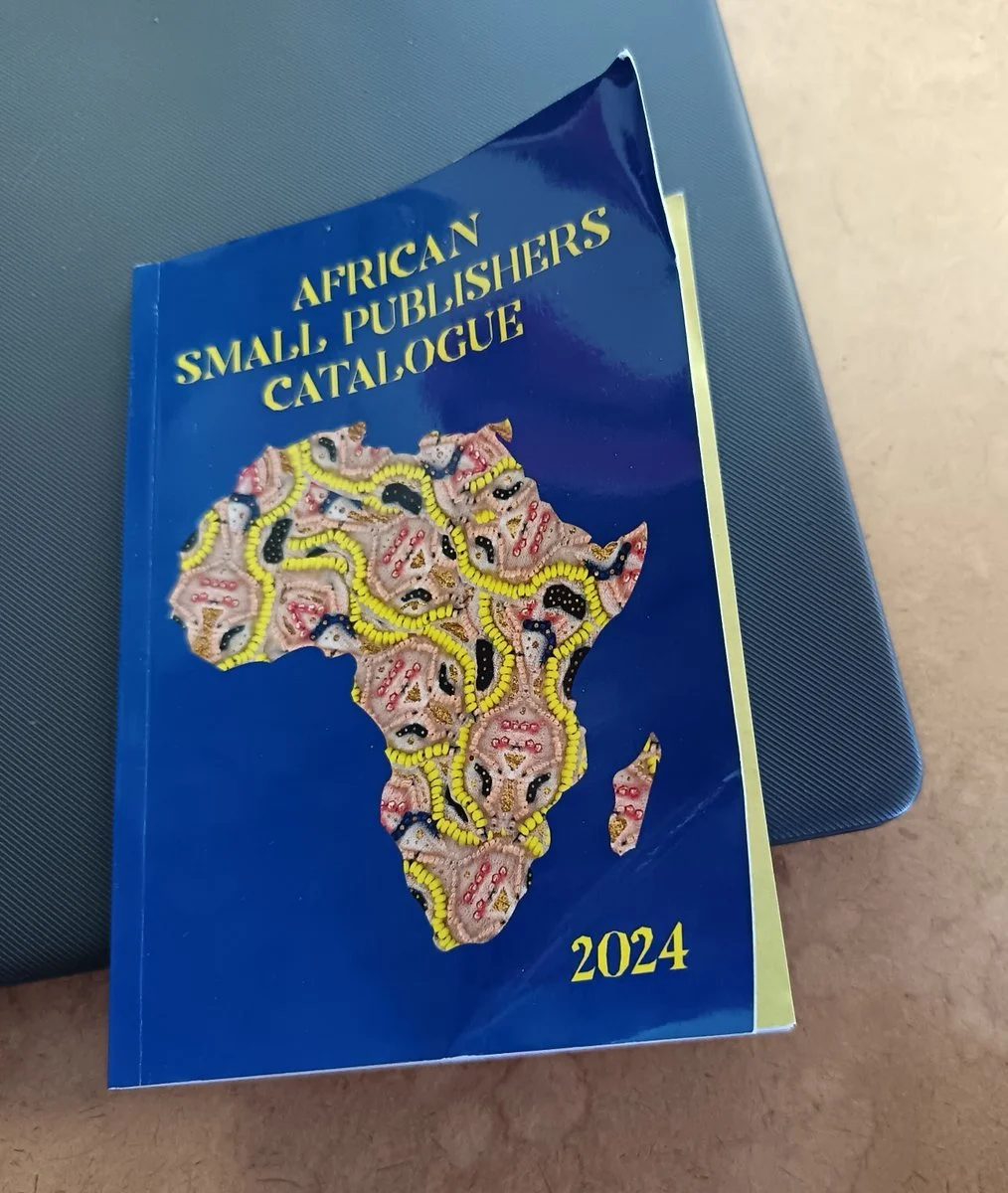
A legacy publishing artefact from our studio’s formative years
African Small Publishers Catalogue 2024
AFRICAN SMALL PUBLISHERS CATALOGUE 2024
“…a gateway to a world of stories, ideas, and perspectives that might otherwise remain undiscovered.”
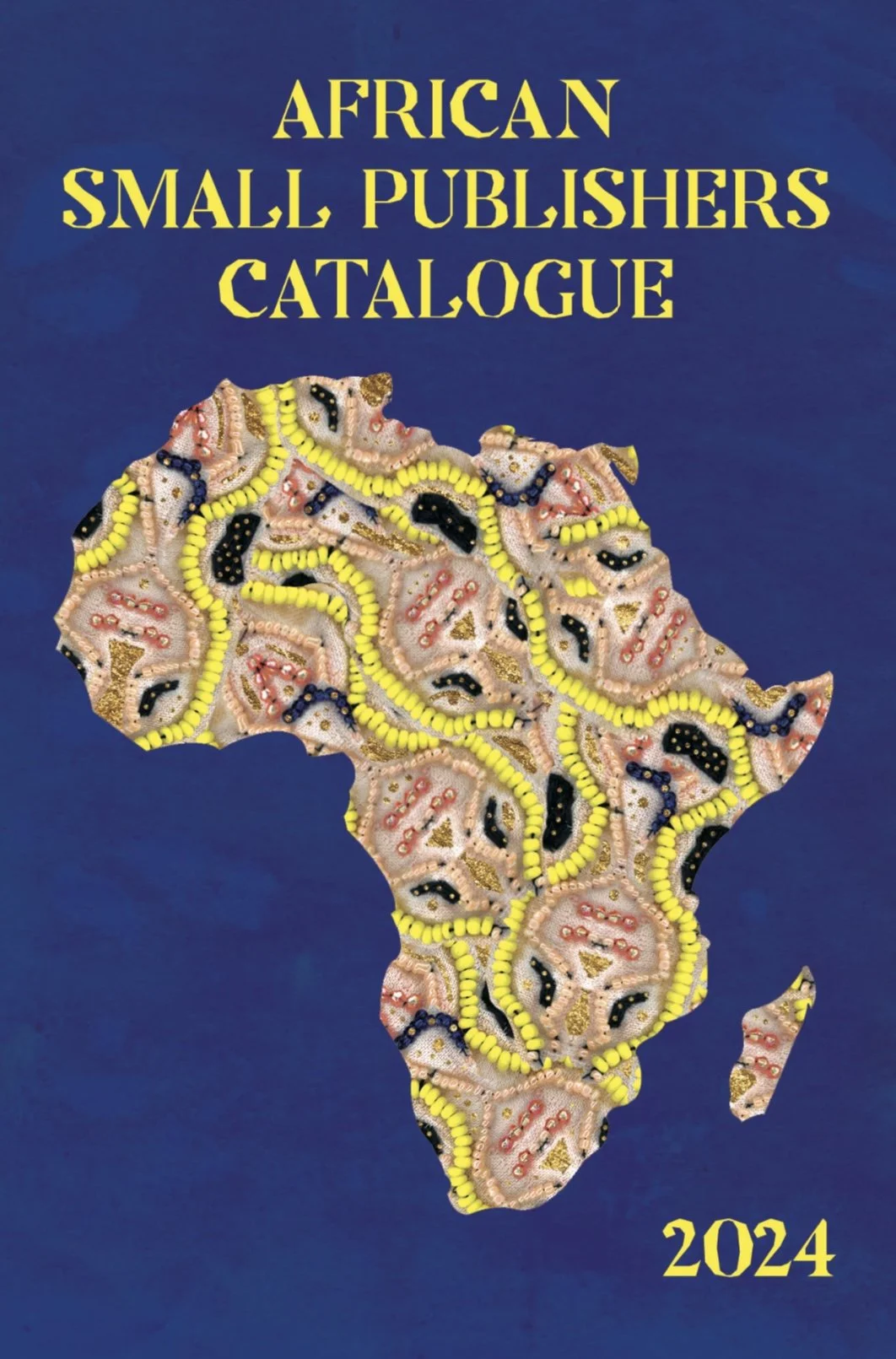
An early Stoep Collective project for southern African feminist publisher, Modjaji Books, created for the sixth edition of African Small Publishers Catalogue 2024, showcasing 60+ publishers from across Egypt, Ethiopia, Ghana, Zimbabwe, Senegal, Nigeria, Togo, Mauritius, Mozambique, Morocco, Uganda, Rwanda, Nigeria, Tunisia, South Africa and Namibia, as well as Canada, Germany, the UK, the US, Switzerland and France. The cover drew on fibre art originally made by Megan Natasha Ross and is included here for the way it alludes to our roots in literary, cultural and artistic spaces. Stoep Collective rarely takes on visual production clientele anymore; today, our studio employs narrative strategy and editorial elegance to build worlds.
COVER ARTWORK FOR AN AFRICAN LITERARY PROJECT
The African Small Publishers Catalogue 2024 is the sixth edition of a resource created for African publishers, booksellers, writers and literary professionals. Published by Modjaji Books, the 132-page catalogue lists more than 60 small and independent publishers, as well as literary agents and organisations working across African book culture. African Books Collective describes it as an “invaluable reference book and tool” for discovery, collaboration and cross-border publishing networks.
Stoep Collective was commissioned by Colleen Higgs of Modjaji Books to create the cover for the 2024 edition, using original fibre artwork by Megan Natasha Ross.
THE CONTEXT
The catalogue is a practical map of an under-documented literary ecosystem, connecting independent African publishers with a global audience, fostering networks across the continent, and acknowledging the difficult conditions faced by independent publishers. Its contents spanned publisher listings, literary agencies, children’s literature organisations, self-publishing, women publishers, #ReadingAfrica and African literary networks.
THE COMMERCIAL OPPORTUNITY
Small publishers are overworked and the unsung heroines of the literary industry, operating with limited visibility, limited distribution power and fragmented access to readers, booksellers and cultural institutions.
The African Small Publishers Catalogue responds to that problem annually by making this particular ecosystem easier to access. It gives publishers, writers, booksellers and literary professionals a shared reference point: a way to identify peers, discover presses, build partnerships and understand the wider publishing field.
WHAT WE DID
Stoep Collective created the cover artwork using fibre art originally made by Megan Natasha Ross.
The work brought a tactile, handmade surface into contact with a publishing resource concerned with networks, visibility and cultural labour. It gave the catalogue a recognisable public face while keeping the material close to the world of books: paper, thread and handiwork.
While this project is from Stoep’s early formation, before we moved into our current, text-base practice, its remains symbolic of our underlying impulse to translate the visual and text-based.
THE DIFFERENCE
The cover travelled through African Books Collective, JSTOR, Brittle Paper and The Johannesburg Review of Books. Brittle Paper framed the catalogue as “making a big difference in Africa’s literary culture,” noting its sixth edition and inclusion of more than 60 publishers from across the continent and beyond.
The Johannesburg Review of Books later published an excerpt from the catalogue on self-publishing, foregrounding the changing status of self-published and hybrid publishing in South Africa.
PROVENANCE
This project is from our archive.
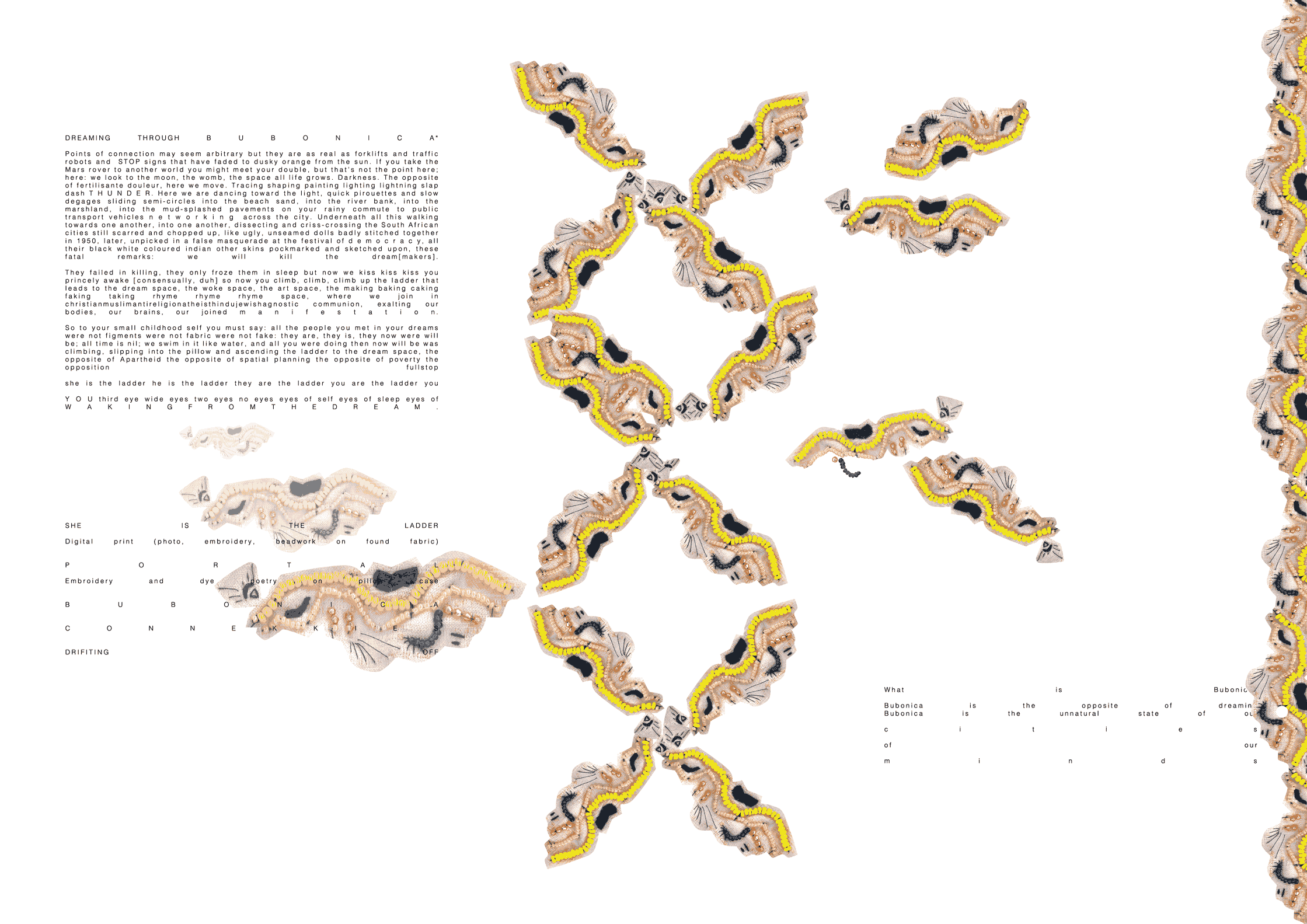
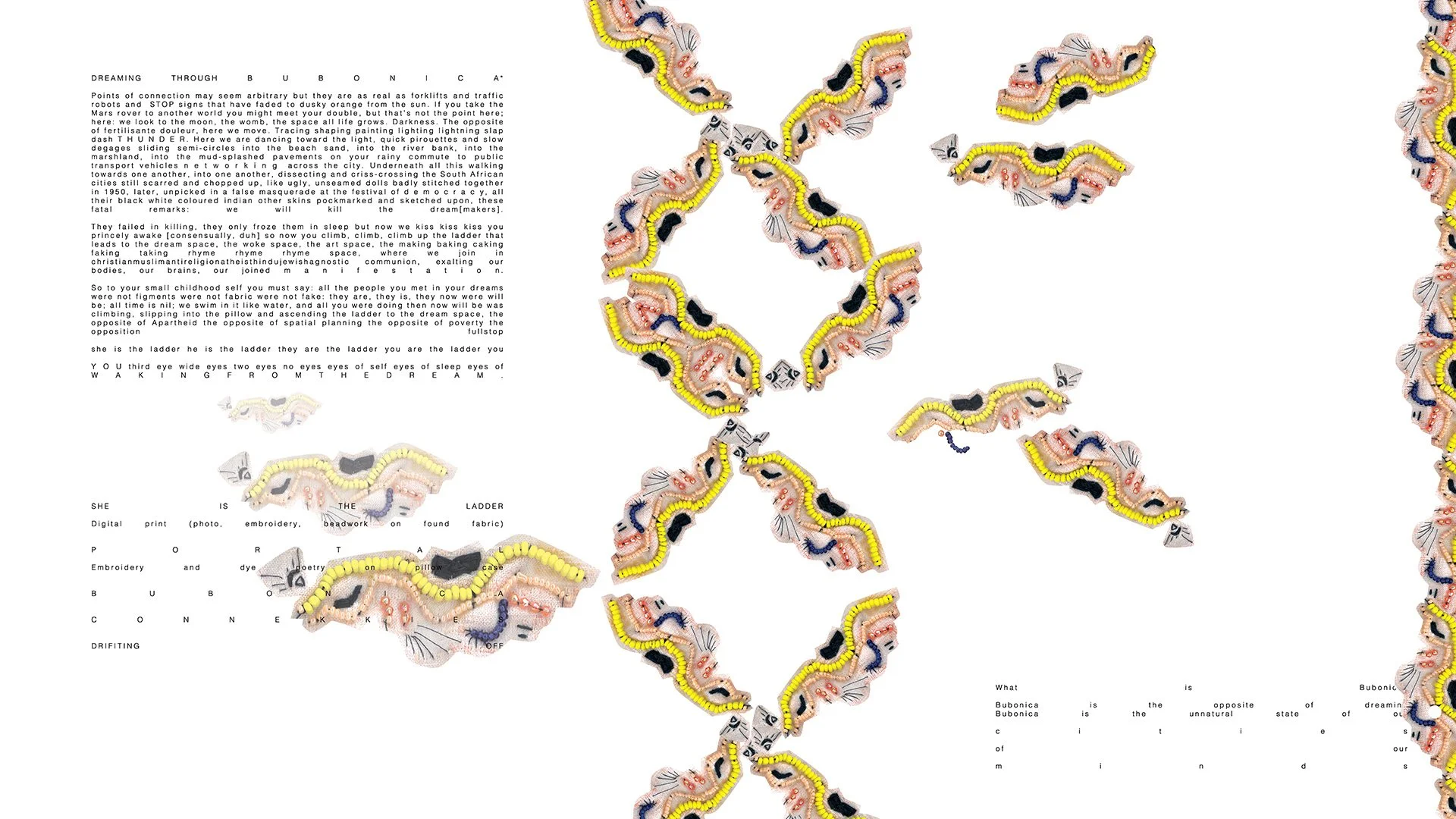
The cover drew from Bubonica, a series by Megan Natasha Ross combining typography, fibre art, beadwork, and embroidery. Originally developed for Wombanifesto, the series mapped pandemic rupture, South African spatial inequality, grief, restricted movement and the reimagined shrines of the once-scarred cities of the nation.
While we only work in text, this archival proejct speaks to the same underlying impulse that drives our work: a search for truth, a distinct voice and originality.