“A Murmur Akin to Water’s Movement”
A Stoep Collective Interview with Mika Márffy
Megan Natasha Ross conducted this interview over email and text with Mika after a series of DMs and emails between the two. They last saw each other in Cape Town in the late 20-teens, after almost a decade after first meeting at UCKAR (the university currently known as Rhodes) in 2008. This is them — artists, mothers (rebels, maybe?!) — being in community and conversation together.
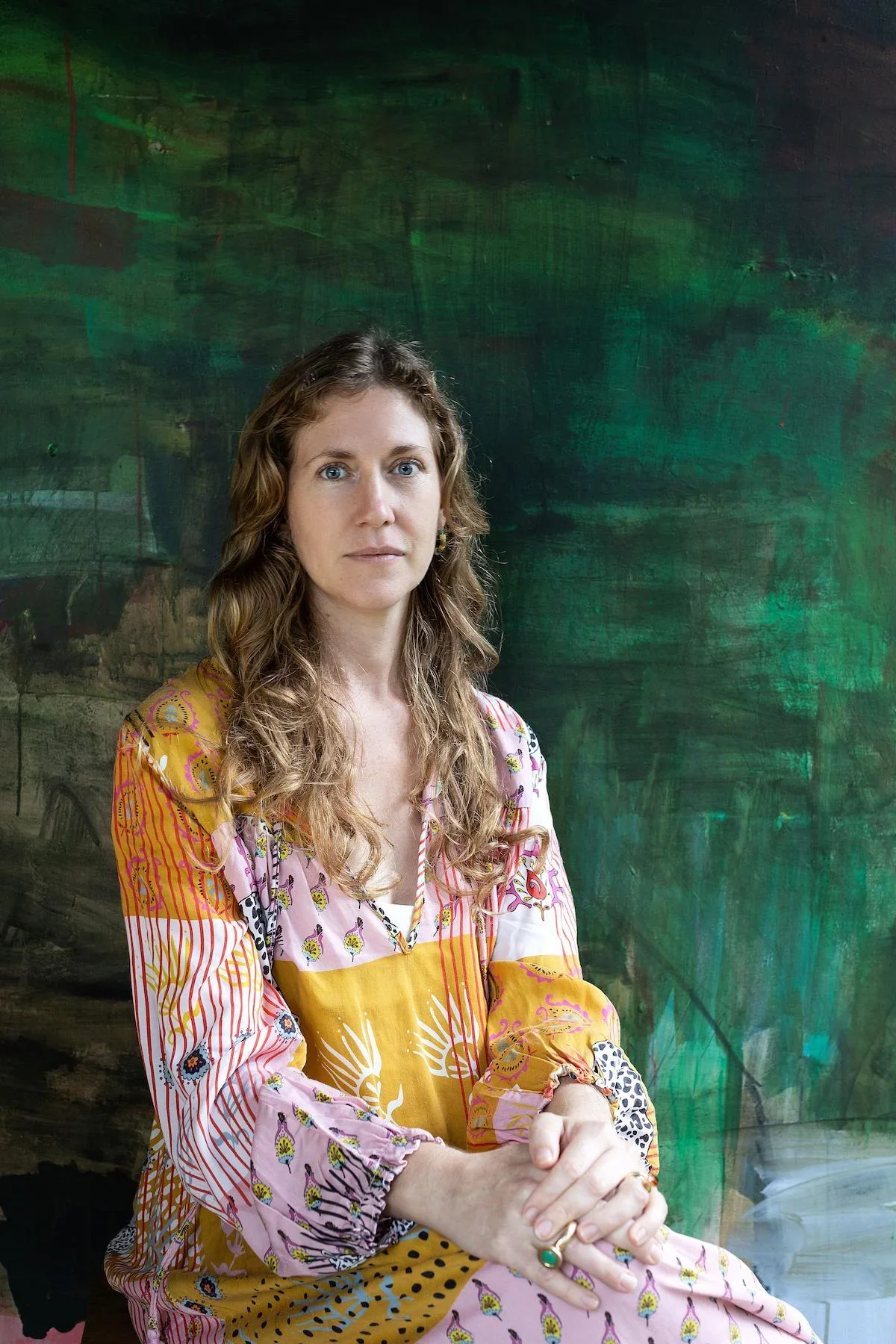
MEGAN NATASHA ROSS FOR STOEP COLLECTIVE: Mika, thank you so much for making time for this interview.
Besides sharing four very intense university years with you at UCKAR some almost-20 years ago, Stoep Collective as a whole are long time fans of your work and your approach to colour, texture, and the way you weave motherhood throughout your body of work — and this seems so effortless but as a fellow mother, I can imagine it’s truly not!
For those who are new to your work, please tell us about yourself, your practice, and what led you to this point in your career?
MIKA MÁRFFY: When I first moved back to Mkushi in 2015, the farming area where I grew up from the age of 14 having moved here with my parents from Zimbabwe and which now housed my husband who had recently moved back after serving time with the Royal Marines, I started a free fall into figuring out what was ‘mine’ in terms of painting — what did I want to paint? What did my work look like? How did it feel? What did I want my work to say? — all big questions — and really it was a lot of muddling about in the dark, which it still feels like now a lot of the time.
I allowed myself to start building up a body of work that fell outside of all the conventions and expectations that I had absorbed up to this point, and to deconstruct or dismantle the inner voices of what was considered ‘good enough’ — I took a great big hammer to all I had learned up to that point, not only in terms of painting but also in terms of my innermost self, and it felt terrifying to dive into the deep end like that, but from that process I allowed for a space to open that was intuitive, spontaneous, almost mediumistic in the way that the work began to form itself from all that I had been collecting: thoughts, feelings, memories, resonances; all the many perceptions that I had collected like treasures over the years started to pour themselves out onto the canvas.
“When a work ‘sings’ — that is the closest thing to God that I’ve ever experienced. Other than giving birth of course. But then I suppose that’s ultimately the same thing!”
I have slowly been finding my way with my work and what I love is that the more I practice the more it is apparent to me that the process of making is very much like life itself; I learn so much about life and living from the process of making the works. How to be present, how to let go, how to open yourself up, how to be courageous and break the damn thing that you’ve just spent the last 6 months building.
Break it and jump into the deep end and see what’s on the other side of the box you’ve put yourself in. Allow for it not to work. Allow for the ugly and the bad. Become open to flow, and the harmony that comes on like a gift at the end of it all, once you’ve allowed it all to fall into place.
And always being open to intuition: we all muddle our way through life, we all question and seek answers continuously but if we allow it, intuition is always there, quietly guiding us along.
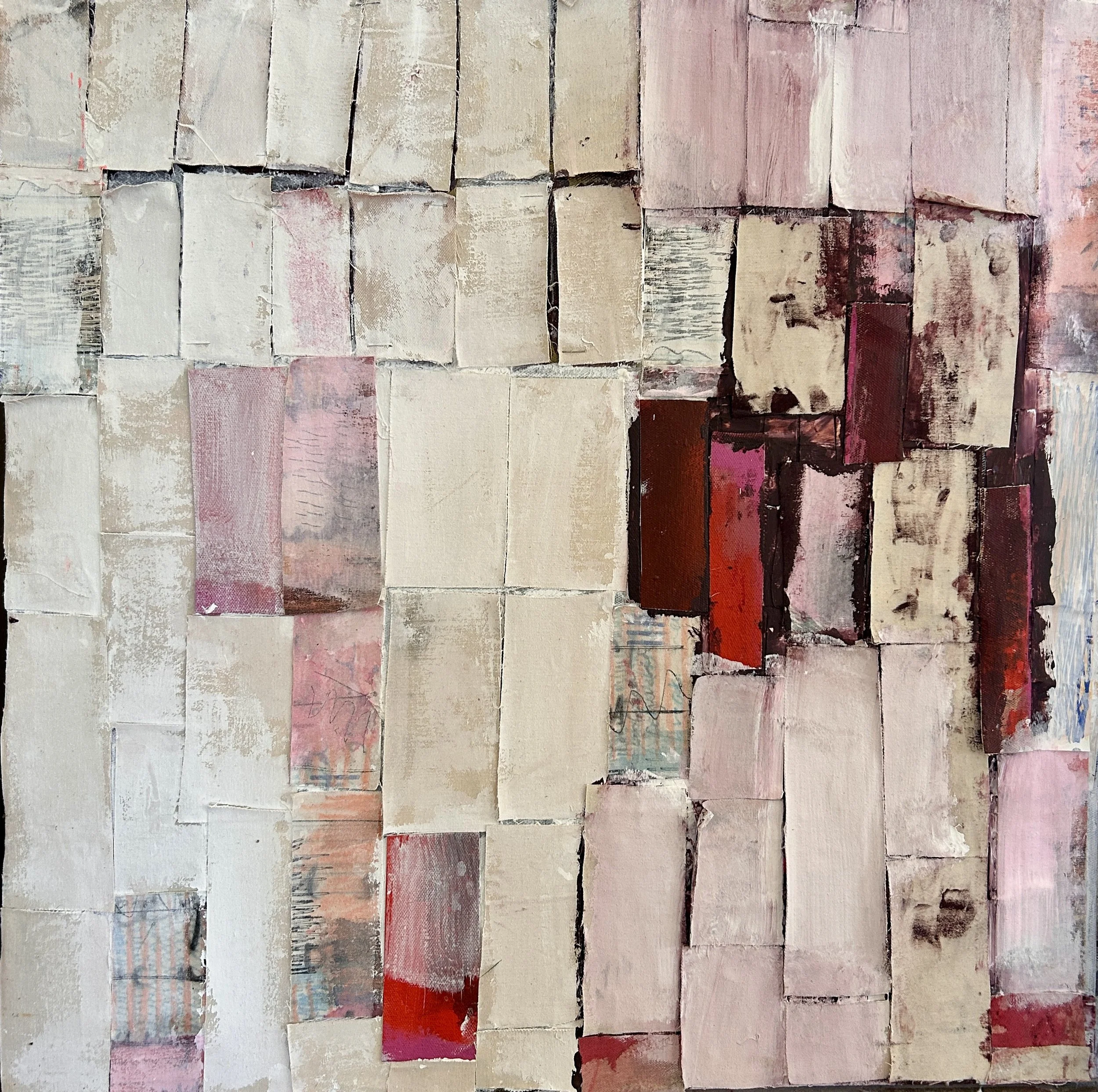
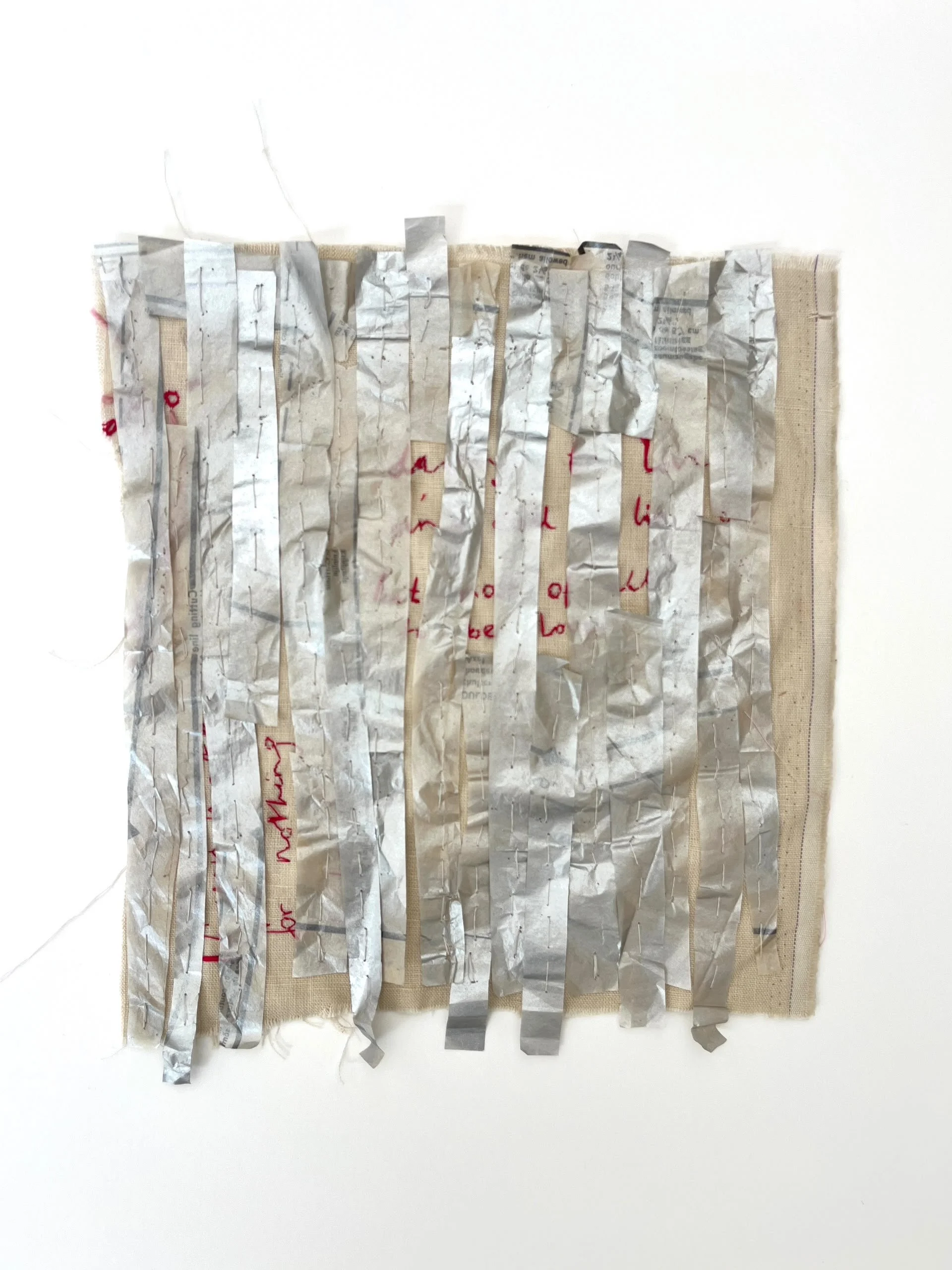
I think what I love most about your work is the balance: there’s a sense of what is primordial, the dark waters of the womb, the space before creation starts. And yet there’s this unceasing playfulness and light, too. As I’ve mentioned recently, I’m currently obsessed with your silvery tapestries.
And from this lightness of material, to employing generous dashes of pink, in incorporating these moments of ‘reprieve’, almost, a space for breath, for joy… Is that purposeful, in that, is it something you aim for, or does it come to you more organically, more naturally?
I might start with an idea when setting out on a new work, it is usually something vague like a colour that I’m obsessed with, or a song that I’ve heard, or the feeling I’ve had in any number of moments such as in giving birth, or in the way the forest feels so densely around me during the rainy season; or else it is the materials that I’ve chosen to use by chance; and it is usually a perception or a ‘vibe’ that I look to start a work with. Everything else starts to come together organically and spontaneously — not easily, that’s for damn sure! — in conversation with the materials that I use, in a very accidental and unplanned way. I like to keep it open-ended like that; the less control I have over the process the better. I know that as soon as I start thinking too much about a piece, conceptualising it, discussing it with the panel of curators in my head, it will be shit. Completely and utterly rubbish. And if I continue like this, with this kind of control and dictatorship and bias over a work, about how I want it to ultimately look and what I want it to say that connects with art history or current topics, then I might as well cut it up or paint it over, which is what I end up doing a lot! And then the work can begin again and we don’t all have to waste our time with discourse and endless noise about nothing much at all. It can begin to be about the vastness of the creative impulse, something of ourselves so much bigger than just ‘I’, something akin to the sacred. Only then can harmony and balance be achieved in the work; and this is ultimately what I endeavour to achieve in a finished work.
Only once I feel that the painting hangs together in a certain way that resonates well can I leave it alone. The work itself dictates, if I allow it. My job is to open myself up enough to allow for that emptiness, that looseness, so that the work can get on and do its own thing. I am just lucky enough that I get to be a witness to the process of it.
And when it works, when it all comes together in the way that I long for it to, man — that feeling is like nothing else. When a work ‘sings’ — that is the closest thing to God that I’ve ever experienced. Other than giving birth of course. But then I suppose that’s ultimately the same thing!
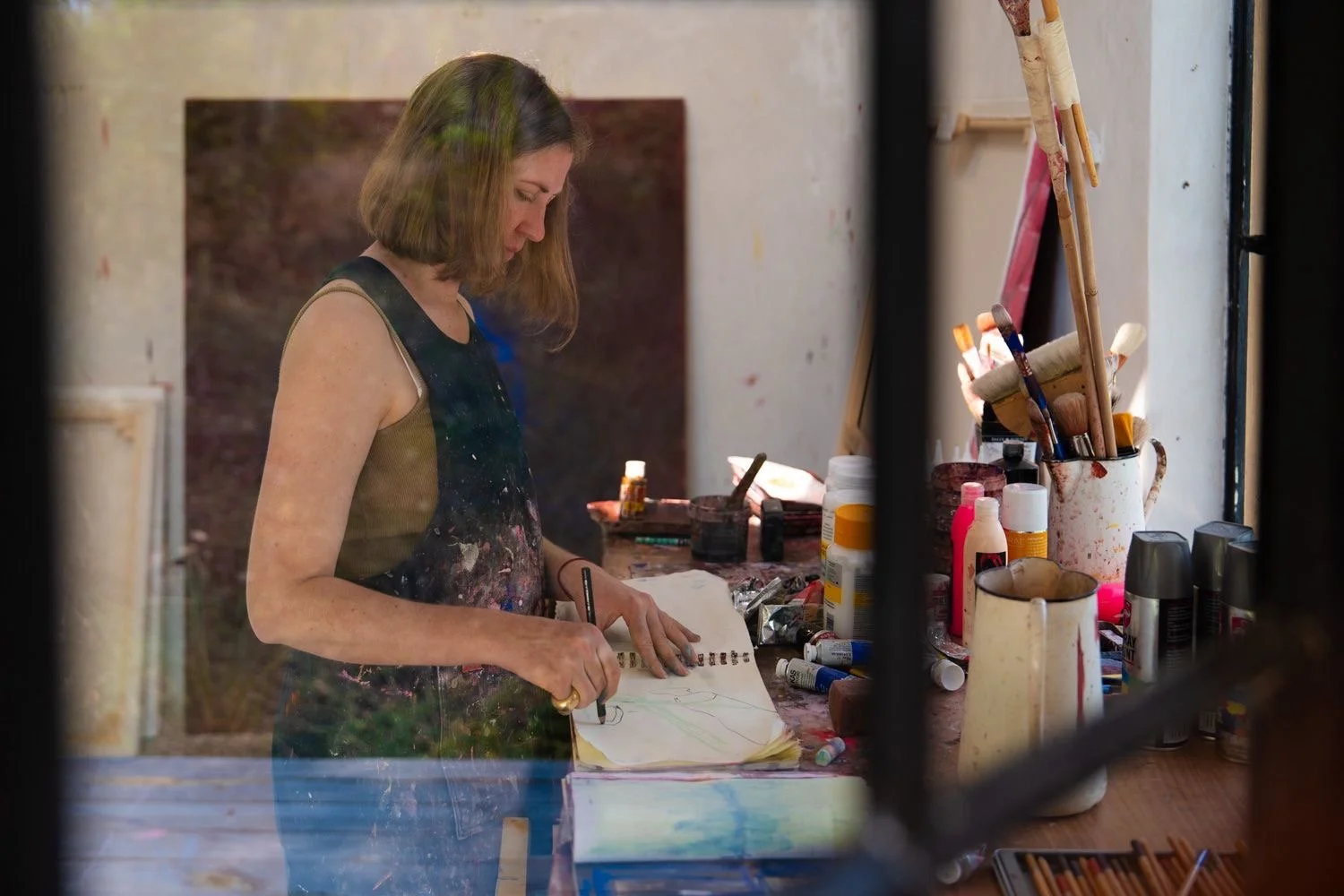
I’ve spent digital time in communion with your paintings thanks to your website. This looks like staring, gazing, meditating, but I leave your page each time feeling so much, honestly similar to how I feel when I’ve encountered work by Rothko. I’ve sat in front of his paintings at Tate Modern for hours at a time, just absorbing the entire atmosphere that the paintings seem to project, as if the consciousness of them is not just captured but then reproduced.
The poet Anne Carson, who, since interviewing you was named the Nobel Prizewinner for Literature, once called a poem “a recording of an action that the reader’s mind can then enter into”.
What do you hope people take away, or experience, with your work?
Something that I find incredibly irritating and terribly closed-minded is when people say to me, “But what is it? What am I supposed to be looking at? I know that it’s ‘proper’ art because I just don’t understand it.” And other such inane comments. And usually this is a caveat for not looking at the work any further, for shutting down completely, giving up, and turning away.
What I like better is people who feel something from the work. If the work bothers them somehow, if it feels ‘big’ for them, in either a negative or positive way; if they feel inspired; if they feel a release, or a presence from the work, almost spiritual; if they feel challenged by the work in some way; if they feel that they really, really dislike or hate the work; these are all responses that I hope for when people encounter the work.
I feel really sad for the first class of people. What it demonstrates to me is a lack of creativity and imagination, and I don’t believe that creativity is something that some people have and others don’t. Creativity is like a muscle, or perhaps more like a person’s digestive fire. It needs consistent care, nurturing, nourishment, working, attention. Creativity to me is sacrosanct. If we were ever to take anything from the old world to build a new one it would be, in my opinion, creativity.
Thinking outside of the box. Adapting. Learning through play. Looking at the potentiality of things. Allowing for the rigid structures of the mind and the things we think we ‘know’ to dissolve. And most importantly, an attitude and mindset of softness, openness, and curiosity, and presence, and questioning of the world around us, in this moment.
I hope my work makes people feel that they’ve come up against something that is asking them questions, that is prompting their own inner exploration. Or at the very least, to open that door. Or to realise there is in fact a door there in the first place. And then to hopefully fall down the rabbit hole and become awake to all sorts of things they never allowed themselves to believe existed.
Like a coming home to oneself.
“When you don’t have much around you other than the raw material of nature, in a quiet little eddy of a place like the home I live in, you have to rely on making it yourself from scratch. And that has been a really good lesson.”
Whose work do you admire? Who inspires you; what drives you?
My kids inspire me hugely.
When I get them in the studio with me, seeing the mess and the play and the complete raw creativity without fear or the need to perform the work or to create a product at the end of it is something that I aspire to every day. The marks they make are delicious. Sometimes I take a little scrap of paper that has something they’ve painted and try to use it as a starting sketch on a large scale painting of my own, or I copy their marks and colour combinations to kick start a painting that has become stagnant.
Lately though I’m on a deep dive with the work of Louise Bourgeois. I absolutely love her exploration of the relationship between Mother and Child. But beyond that, her exploration of ‘womanness.’ More and more as I explore my own work, my own perceptions, my own preferences, the depths of my subconsciousness, I begin to realise that it is a fact that women have a particular language of their own.
While I deeply admire the work of many male artists I just find something so familiar, resonant, so right-on-point in the works of women artists, in whichever modality it might be. It’s all connected somehow; a picking up of a thread that has been dropped; a conversation beginning to form, in the shape of a vast net or web that speaks in many different ways but all speaking of one particular thing: and I think that is life itself.
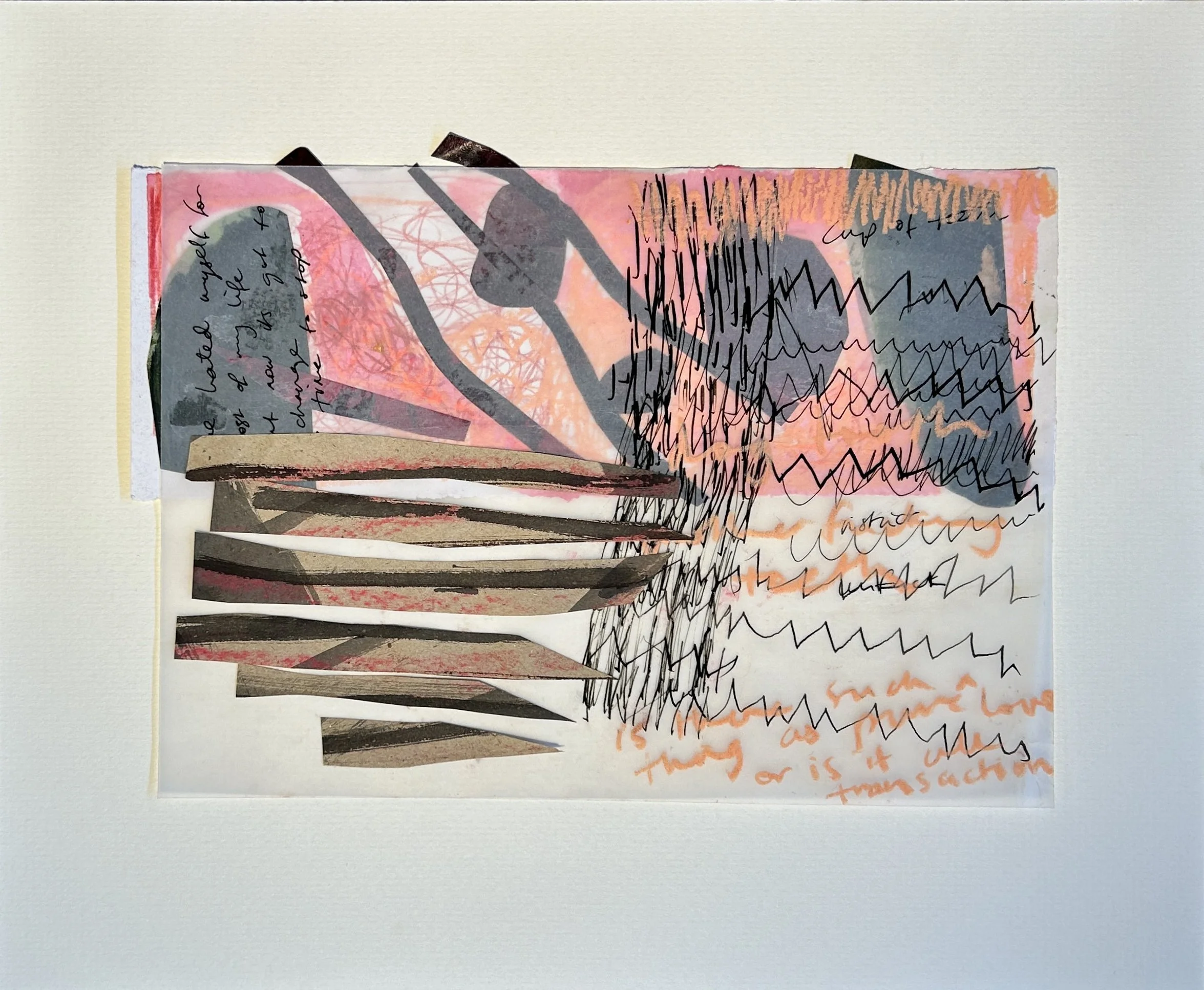
Women, mothers — whatever stage of life or womanhood they’re in, even if they’ve never had children — they tell a very specific story, that perhaps is apparent only to us as women? Often it’s quiet; barely perceptible; but it’s there, like a heartbeat, or a bubbling, a murmur akin to water’s movement.
Lately I find that all I want to see or experience is work by other women. Music by women, books by women, films of and by women. It’s all so damn beautiful.
I wouldn’t call myself a feminist or an activist in any sense of the word; it’s just a preference, or rather it’s a seeking out; a prying open of Pandora’s box.
You’ve spoken beautifully about making art, and creating, as a mother to two small children: between caring for your boys, your family life and your studio, how has motherhood changed your relationship with time, with your ambitions, and maybe also with your paintings themselves?
I was asked a question the other day, “If you had to state one thing that people don’t really know about you, what would it be?” And my answer to that is definitely my ambition. My god I’m ambitious since having kids — I never knew the extent of my ambition until I had children. It’s a fire deep within me that roars — my ambition is so vast that I want to change the world, I want to tear down structures and create a revolution.
That is how large my scope is.
It’s a kind of heartbeat deep inside that pumps me ever closer to the vision. I feel that having birthed my two boys — both in beautiful natural births and a deep relationship to the experience of birth itself — I in actual fact birthed myself, a version of me that is steely as hell, a warrior woman — I never knew this version of me would come to exist.
It is because of motherhood and my two beautiful children, my most precious gift from my husband, that I believe now in the huge potential of my craft, of my hands — to build a better future for myself, for my children.
It sounds like a cliché; but like with the womb work I am working through many different layers of this multidimensional experience of life and creating a new world for us. It’s huge. Lack and scarcity and ‘not good enough’ and gaslighting and invisibility, all energetic bonds that are carried through our lineage, have no place here anymore.
I will make sure that it ends with me.
In an interview (I’m so sorry, Miks, I cannot recall where I read or saw this, but I was deeply struck by your words) you said,
“They have been extremely rapid, in-the-moment works with the little time I have available, but perhaps that’s not a bad thing for this phase I’m in as it’s a sharper, more intensive focus I have within these parameters of time management. (How I long for the days to come when I can get lost in a work without the thought of time or making lunch or school pick ups).”
Could you speak to this a bit more please?
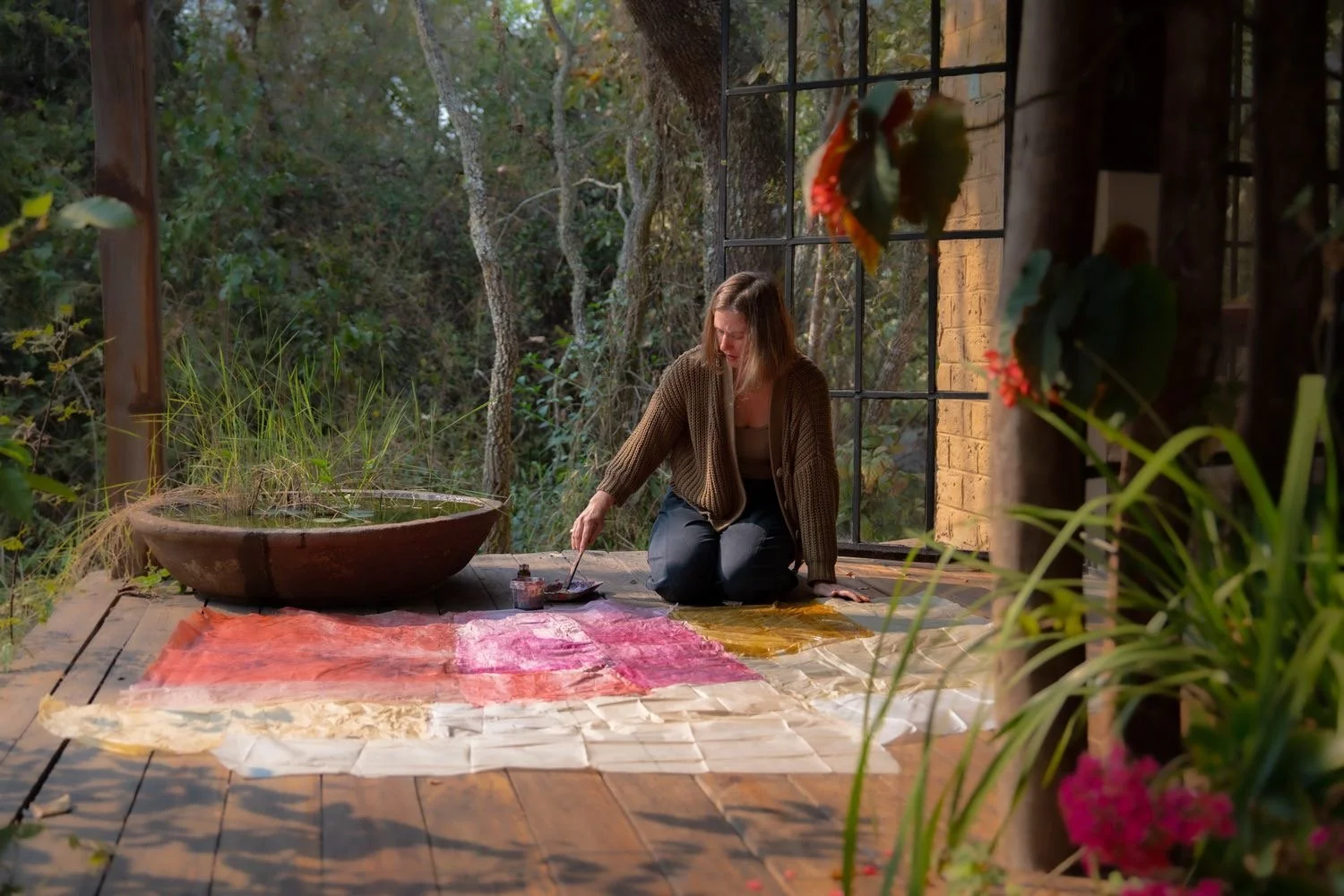
I once visited an artist at their studio in Cape Town, a great big sprawling room in a warehouse of sorts, lots of other creatives in the rooms next to theirs, and they measured their practice in the length of a day, sometimes being there into the night; and that freedom, that expanse of time to get lost in the making of work was so foreign to me, so tantalisingly out of reach that I experienced a sharp pang of envy that took me quite by surprise.
My practice is measured in the structured times of a day.
At 06:00am Sami needs breakfast already; at 7:00am Tom goes off to school; at 11:30am I had better start preparing lunch for when my husband comes in from work by around 1pm; at 3pm Sami needs his second nap, and at 4.30pm I should really start on supper so we all have a nice early school night. And again it goes the next day, on and on, without deviation from the schedule.
I could scream in frustration sometimes at the rigidity of the days measured in time but then that’s life with kids isn’t it?
I can spend longer in the studio but then there won’t be lunch (no restaurants close by! All from scratch remember) and the meltdown of hungry children is just so not worth it. So I package my studio time into neat little slots that fit between the domestic rhythms of family life while secretly wishing I could burn the whole bloody schedule to the ground and not have to keep checking the time — but that’s another one of the paradoxes I experience with my life in this place I suppose!
You live and work in Mkushi, in Zambia’s Central Province, and as an artist who for many years also lived away from my country’s capitals, and from the arts (in Gonubie on South Africa’s Wild Coast), I appreciate how this can be a kind of generative and tricky space to occupy.
I remember feeling particularly alienated and ‘outside’ of things, all the time, on the periphery, and yet, sometimes I wrote my best work that way.
How is it for you?
I feel that my life here in this place is a constant paradox, and I have come to accept that paradox will be a constant bedfellow of mine whilst I live here. I have the absolute privilege of vast expansive spaces all around me, wild and untouched; achingly beautiful and full of richness but the loneliness of this place, the incredible oppression I sometimes feel here, is so intense that it can feel debilitating and I have periods where I struggle against feeling like a deadweight is dragging me down.
Although, I definitely feel that the lack of distraction in a place like this, where you can’t just pop out for a coffee or go and see the latest exhibition that’s showing nearby or drive down to the art shop when your supplies are low, is what allows for the rigorous work ethic that I have, of constantly being present and showing up in the studio every day and getting it done, as well as being able to be a stay-at-home mum who is present (ish) for her kids.
Not only that but the lack of convenience of supplies or consumables grafts a fiercely resilient mode of utilising whatever is around you.
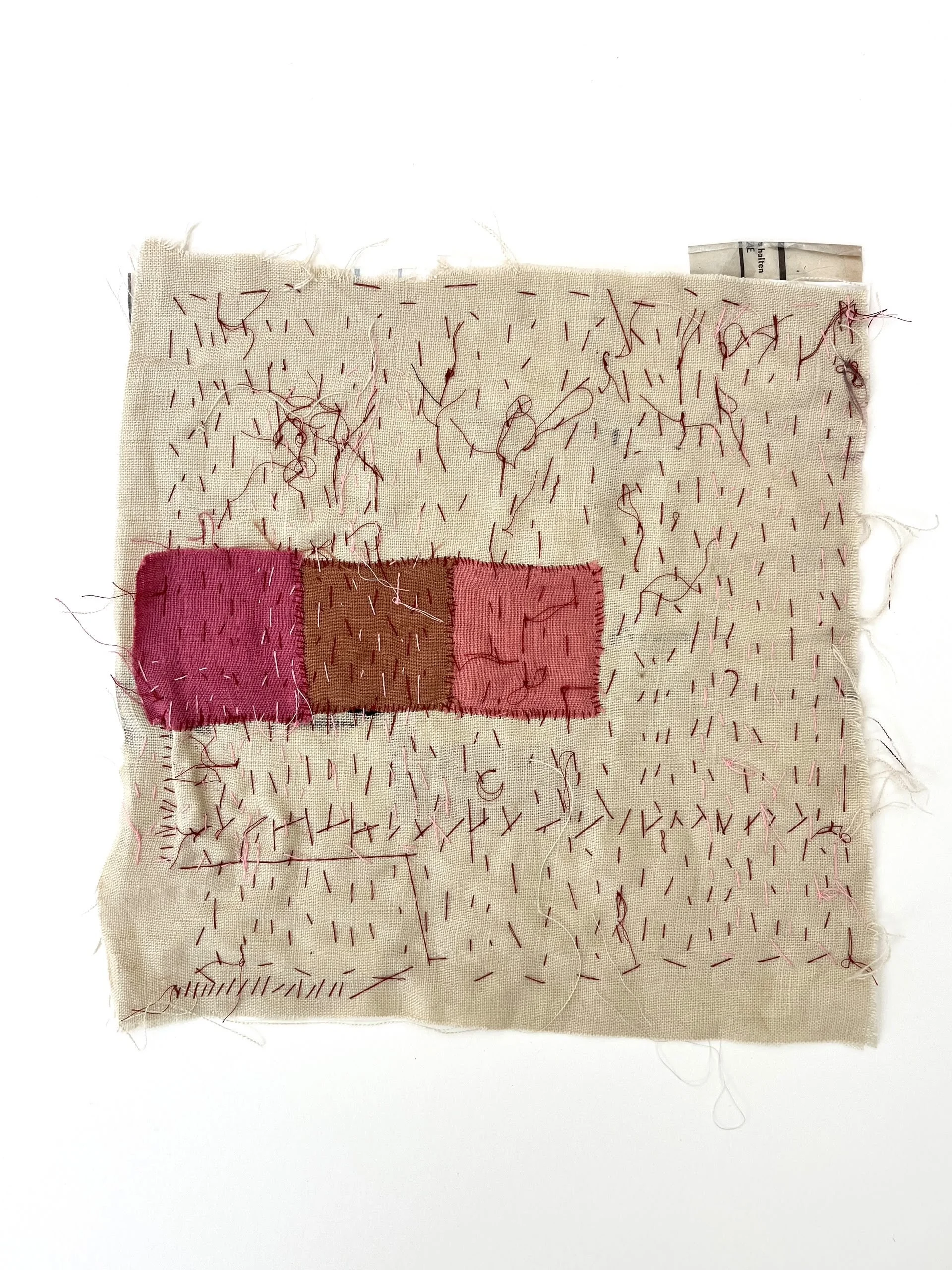
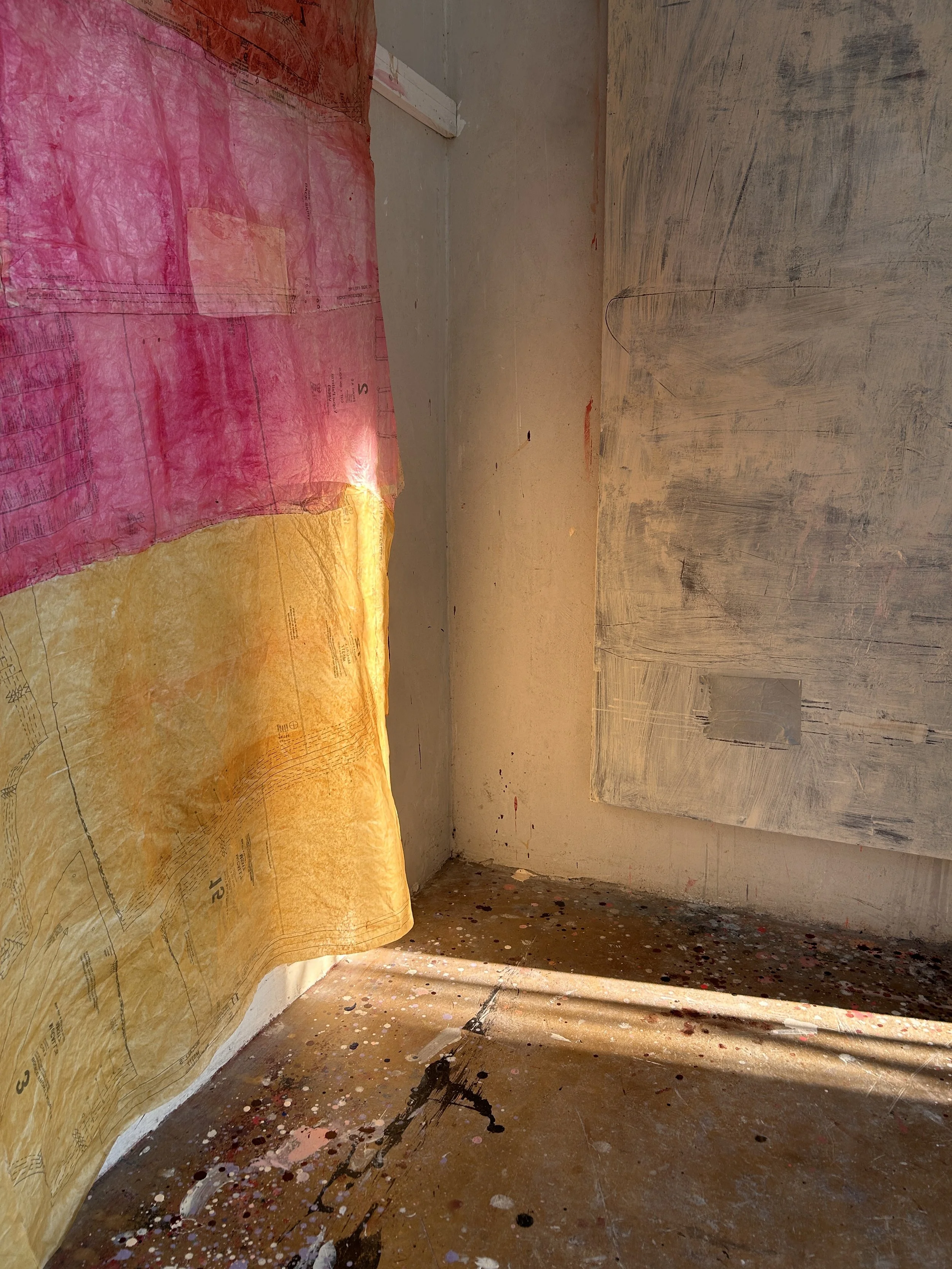
For years now I have been collecting random scraps: I have boxes and boxes of throwaway things that I hang on to, like old letters or scraps of cloth or old sheets that have been torn or papers of all kinds; bits and pieces that should have been thrown away but live a second life when they come into my studio, even if just as the embryo of an idea for a new work or collection.
When you don’t have much around you other than the raw material of nature, in a quiet little eddy of a place like the home I live in, you have to rely on making it yourself from scratch. And that has been a really good lesson. I wouldn’t change it either; I love drawing on my collections and archived materials when creating the work, they are all mine, completely unique to me and it gives the work a nostalgic, layered feeling, as if looking through one of my journals, or into a room of my house.
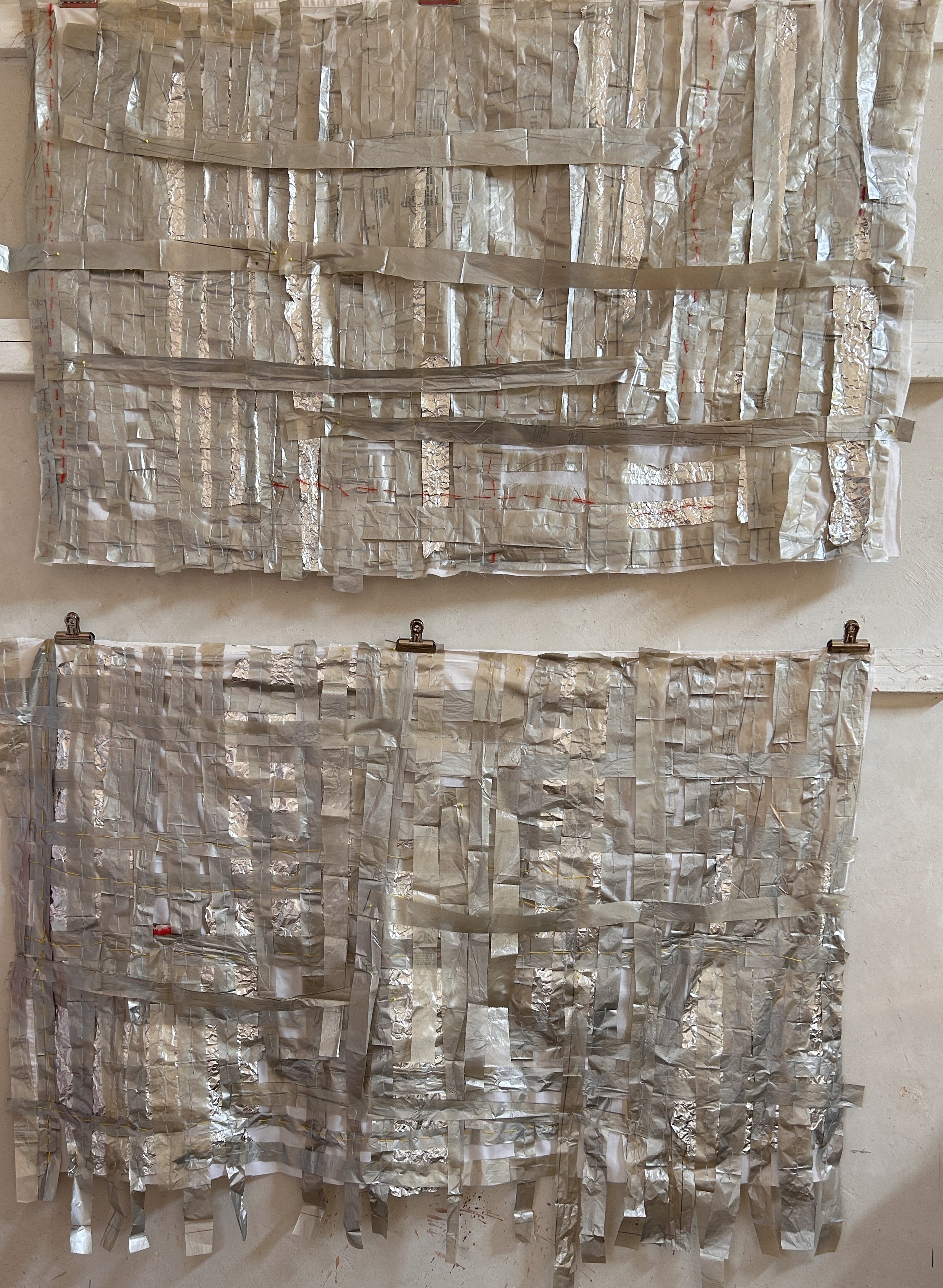
“I’ve been focused on building a body of work over the last couple of years from particular materials that I have been collecting, namely old sewing patterns which I’ve picked up from my mother’s and grandmother’s collections, both being ‘mistresses of the cloth.’ I particularly enjoy this material because of its transparency, a formal element that I am very drawn to in my work in general. I’ve been playing with different experiments with these papers — spray-painting them silver; joining them into a large hanging ‘tapestry’ and staining them with inks; cutting them up and weaving them, stitching them onto cloth. I love how the light comes through the papers and their incredibly delicate nature, but also their resilience.”
This resonates with me so much. I think it’s that sense of “necessity being the mother of all invention” too, and how the absence of materials in a way can make one so much more imaginative and resourceful.
It reminds me of the work of London-based Ukrainian artist, Anna Perach, whose work examines “…how elements associated with the domestic sphere such as textiles and carpet operate as an extension of the self and reflect one's heritage and gender role”.
I have a quote from her sticky-taped up on my wall in my studio, and while the paper it’s scribbled on has faded to a deep brown now, from a strangely-virulent English sun (this year at least), it’s something I turn to reread almost everyday.
“The domestic sphere is a mirror of oneself — so, for me, home will always be a place where mythology resides”.
And perhaps that speaks to what I feel in your work, radiating from your work, in a sense, far better than I have described. In that you are both interrogating the role of the Mother — the contraints, the beauties, the wonder, the magic, the hardship — as a psychic and physical reality or surreality, by using the very materials of this condition of ‘beingness’: being a mother, enacting motherhood with your boys, inhabiting these actions of care and love.
It instantly took me back to my own mother’s sewing box, a kind of Mary Poppins-esque bag for me as a child, filled with buttons of every shape and description, crocheting hooks and knitting needles, fabric scraps and wool, and what a tumbling kind of jumble it felt like, this enormous potential and possibility afforded by the found materials she thrifted or tore from old linen or axquired from her own deceased mother.
And away from the landscape of motherhood, and outwards into Mkushi and your physical surroundings, what does your current landscape offer your work? What are the ‘downsides’ perhaps, and what would an ‘ideal’ location look like to you, as an artist with kids who are — no doubt — growing up barefoot in the sunlight and air, quite free to roam, in a way that so many kids, my own son now, a little African transplant in London, doesn’t have?
I miss balance quite a lot.
People dream of what I have here — a tranquil and secluded place in the wilderness, views all around, out of mainstream culture and the main drag of contemporary life — and I agree, it is wholesome and rich and delightful but I miss the current and flow of people around me, doing people things and connecting in people ways.
I feel quite lonely here at times. An ideal location would be easier access to markets and places to tap into, being able to plug myself for little chunks of time into the main cultural circuit of connectivity, of ideas and creative flow that comes with more built-up places of urbanness, while still being able to retreat into my wild sanctuary here.
I guess it’s that return to contradiction, I guess. And then, Mika, your practice includes womb work, which intrigues me to no end (as someone with a womb, a mom, too, and also, I guess, someone who’s trying quite hard to re-inhabit this space that for most of my life has brought me a kind of terror — like many women and people with uteruses?).
Tell me more about this, please?
My exploration into ‘womb work’ started around the time I was pregnant with my second child. He was a lucky surprise — my husband and I had both said we would be happy with just one child, one and done we thought. I had started painting really visceral, energetic works before finding out that I was pregnant; a lot of reds, swarthy red rivers of marks that were made with the movement of the whole body combined with a deeply intuitive and meditative headspace.
I had been in an activation of the womb space before falling pregnant, with the work I was doing with various mentors, all of whom were practitioners that utilise the energy of the ‘womb space’ of the body as holistic methodology, asserting that the womb serves as a vital energetic centre for intuition, creation and the holding of ancestral memory. By storing intergenerational stories, knowledge, traumas, I learned that the womb space is a sacred and rich centre to access greater embodiment and activation of one’s power and intuition.
For example, in some of the training I was receiving from a mentor that explored the deep relationship between the womb, wealth and wellness, she taught that by storing intergenerational traumas — including poverty cycles, scarcity mindsets and systemic oppression — the womb can subconsciously dictate how individuals manage, receive or repel wealth. What really captured me however was the creative element of the womb space; it is a powerful energetic space in all bodies, male or female, that holds the archetype of creation, manifestation and primal life force.
As an artist, you can imagine how I am drawn to this kind of energy, creation from essentially nothing; it is a powerful and dynamic space to work from and the results of the ‘womb series’ I made at that time were really quite interesting. Certain intuitive marks kept repeating themselves, and the colours I was subconsciously drawn to using were very specific. I felt that the series began to tell a story or build a structure that I hadn’t recognised before. It was from this work that I was drawn to begin working with other women in my ‘womb workshops,’ creative-play workshops that facilitated a release of blocked creative energies manifesting in the body and in one’s creative and professional life.
By focusing on this energetic centre of the body through various formal practices of drawing and mark-making combined with guided meditations and breath-work exercises and acting in a role as creative ‘doula’ or midwife, I found these containers that were created with these women a very powerful space.
I feel I’ve only scratched the surface and would love to explore this mode of working with other women more.
If you’re able to share this with us, what are you currently working on, and do you have any shows or exhibitions you’re looking forward to?
I’ve been focused on building a body of work over the last couple of years from particular materials that I have been collecting, namely old sewing patterns which I’ve picked up from my mother’s and grandmother’s collections, both being ‘mistresses of the cloth.’ I particularly enjoy this material because of its transparency, a formal element that I am very drawn to in my work in general. I’ve been playing with different experiments with these papers — spray-painting them silver; joining them into a large hanging ‘tapestry’ and staining them with inks; cutting them up and weaving them, stitching them onto cloth. I love how the light comes through the papers and their incredibly delicate nature, but also their resilience.
It is through my exploration of this ‘heritage’ material, being something I’ve picked up from my family’s collection, that I have been thinking a lot about the function of making and the way that the women in my line have relied on this craft before me, in a domestic but also highly creative way. I seem to be a bit of a deviant in the line, but the creativity is still there as well as the desire to make something from the same essential materials.
I’ve always been primarily a painter but lately, since playing around with these different materials, I have been following a yearning for a more sculptural dimension in my work. Cutting up old canvases and arranging them patchwork-like into a new composition, pasted and stitched together; this extra tactility and physicality of the work is exciting me a lot. I have so enjoyed building with paper and creating my ‘paper sculptures’ which are basically these large suspended bodies of sewing-papers.
I am preparing a number of works in this method as well as some paintings and sketches for a solo show that I have at the end of the year with a new, up-and-coming gallery in Lusaka, a dynamic and exciting space, which is opening my show — basically a love-letter to all the women in my line — on the 5th December.
Running alongside this I’ve also been working this year on building up the story of the work or the brand ‘Mika.’ I’ve invested into redoing my website and promotional content to really showcase Mika in all the nuance of what the work holds, beyond just as an artist. I don’t enjoy boxes; I want my website and the promotion of the work to be a platform to showcase the depth of creativity of the brand and the potential it holds for collaboration over various modalities.
There is no limit to the work’s potential to explore new areas.
Thank you, Mika. And finally, a question we ask every Collective member: which artists, writers, musicians, filmmakers etcetera are you feeling right now?
Currently listening to: Peaches, Tomora, Die Antwoord, Jessica Pratt, Dave Clarke feat Chicks on Speed ‘What was her name’ — so good! Pantera Blu, Wet Leg, Biig Piig, Wolf Alice, K. D Lang the ‘Ingenue’ album — among many other musicians!
I’ve been falling into the beauty that is the films of Mia Hansen-Løve, I can’t get enough of them. I especially love ‘One Fine Morning’ and ‘Bergman Island’. Also Luca Guadgnino, I devour every film by him, I am obsessed. I recently watched his ‘After the Hunt’ and could have watched it all over again a second time after completing it. And ‘Sentimental Value’ by Joachim Trier. Also pretty much any film with Vicky Krieps or Sandra Hüller is a must for me.
As to writing I’ve been on a deep dive with The Descent of Women by Elaine Morgan, her fascinating theory of the Aquatic Ape hypothesis, a controversial evolutionary theory that argues for women’s equal role in evolution.
Also anything by Marija Gimbutas is compulsory reading for me. And I’ve loved The Great Cosmic Mother by Barbara Mor & Monica Sjöö.
Lastly, artists. Where to start!?
Definitely Louise Bourgeois — a deep dive into her stuff, endlessly.
And Harriet Raab. Always Tracey Emin. Rose Wylie. Grayson Perry. Eva Bartels. Isabella Ducrot. Celia Paul. Pam Guhrs-Carr. Lazarina Matuta. Simon Back. Virginia Chihota. Portia Zvavhera. Mary Visser. Rothko, obvs.
Always Cy Twombly.
The photography of Vicky Kelly. Ruth Asawa, Marina Abramović.
But I’ll leave it there now because I could go on and on.
For more artist interviews like this one, subscribe to Stoep Collective’s newsletter below